Green Tech Startups Shine at Taoyuan Youth Entrepreneurship Expo, Top Prize Awarded
Richten Energy 137
By NOWnews Media
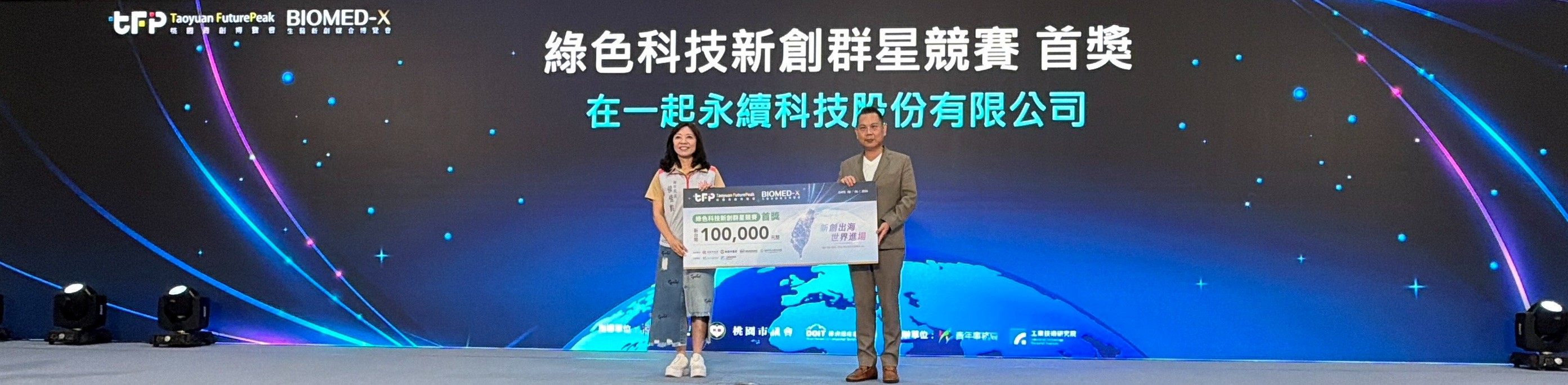
As Taiwan’s new building solar regulations came into force on 1 August 2026, the country’s transition towards building-based energy entered a new policy phase. JOIN IT Sustainable Tech. CO., presented its coloured solar façade solution at the Taoyuan Youth Entrepreneurship Expo on 5 August, proposing the use of building façades to overcome the limitations of rooftop space while linking national-level validation by the Architecture and Building Research Institute, Ministry of the Interior (ABRI), with urban demonstration projects in Taoyuan and opportunities in international markets.
Under the Standards for the Installation of Solar Photovoltaic Power Generation Equipment in Buildings, jointly issued by the Ministry of the Interior and the Ministry of Economic Affairs, newly constructed, extended or reconstructed buildings with a building area of at least 1,000 square metres are, in principle, required to install 1 kW of solar photovoltaic capacity for every 20 square metres. The Ministry of the Interior estimates that the new rules will add approximately 660 MW of installed capacity each year, signalling a gradual shift in the role of buildings from pure energy consumers towards an important part of cities’ distributed energy infrastructure.
In the area of façade solar validation, ABRI has completed the first phase of a coloured solar façade installation at its Materials Testing Center. According to data published by the Ministry of the Interior in October 2025, the coloured solar façade achieved a power-generation ratio of 73.6%. The programme is being expanded further in 2026, with cumulative installed capacity expected to reach approximately 424 kW. The 73.6% figure refers specifically to the power-generation ratio recorded at the demonstration site and not to the conversion efficiency of the solar modules.
Weili Hsueh, CEO of Richten Energy Co., Ltd., said: “ABRI’s greatest contribution is that it transforms innovative technologies developed by companies into public evidence that can be compared, verified and referenced by policymakers and international markets. The 73.6% figure is not a marketing claim; it reflects actual power-generation performance in a real building environment. That provides an important foundation for Taiwanese technology to earn trust in international markets.”
Hsueh said façade solar should not be assessed solely by comparing the peak efficiency of an individual module with rooftop solar installed at an optimum angle. Instead, assessments should also take into account annual electricity generation, usable façade area, architectural aesthetics, glare management, structural safety, maintainability and carbon-reduction benefits.
Building façades do not traditionally generate electricity. By introducing solar technology into these surfaces, cities can expand the area available for renewable-energy generation and help address the structural constraint of limited rooftop space in densely built urban areas.
Taoyuan has set a target of cutting carbon emissions by 50% by 2030 and achieving net zero by 2050, while continuing to promote industrial energy transition, renewable energy, smart energy management and corporate greenhouse-gas inventories.
The Taoyuan City Self-Government Ordinance for Promoting a Net-Zero City also stipulates that newly constructed public buildings and buildings above a specified scale must, unless exempted, install renewable-energy facilities or display information on building energy consumption.
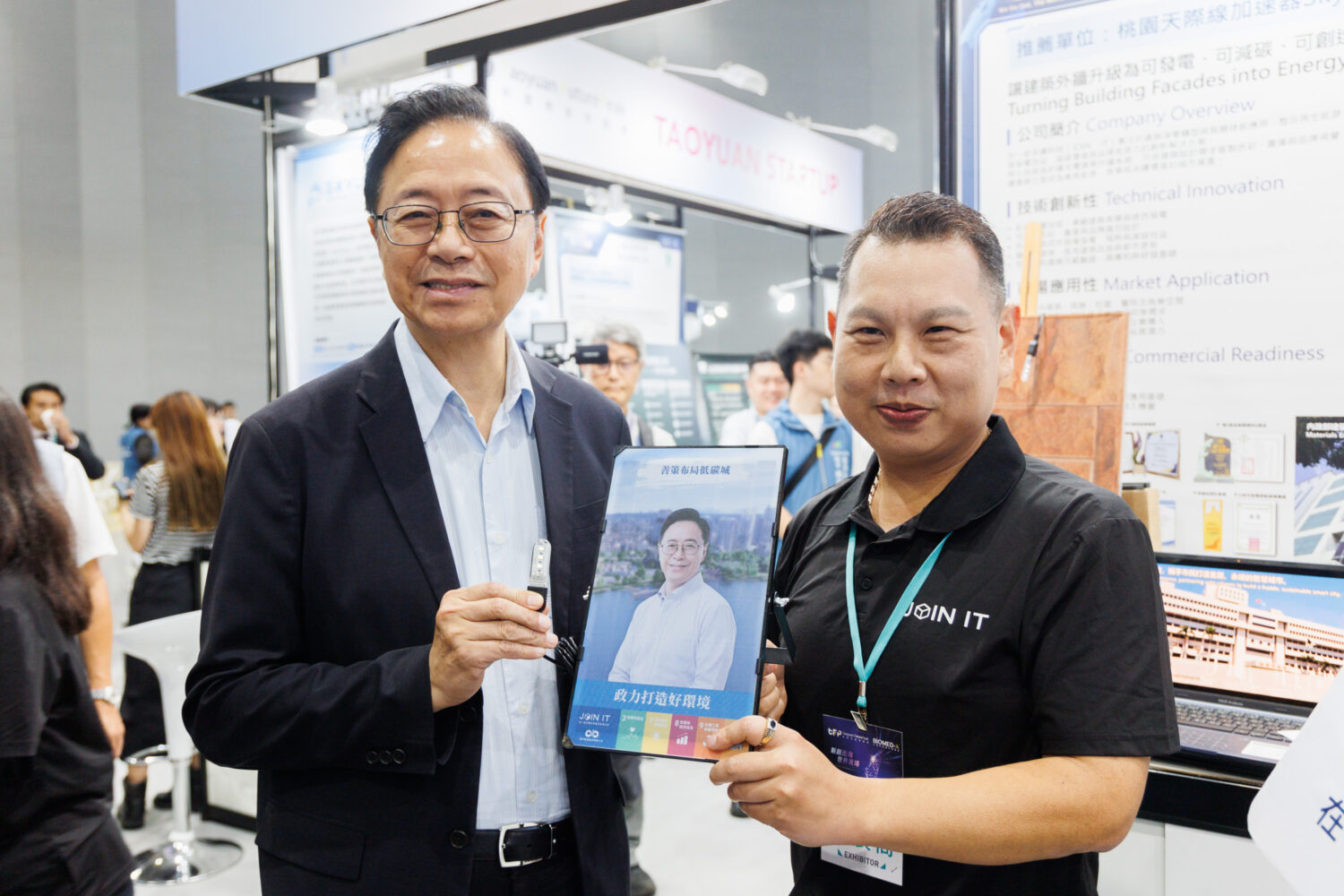
JOIN IT Sustainable Tech. CO., said ABRI provides the national policy and engineering-level foundation for technology validation, while Taoyuan offers the potential to turn such technologies into scalable local demonstrations through its industrial clusters, public buildings, youth entrepreneurship ecosystem and smart-city policies.
If representative factories, public buildings or public facilities can be selected for deployment, supported by real-time data on electricity generation, carbon reductions, operation and maintenance, the resulting projects could form the basis of a Taiwanese net-zero building solution that can be replicated in other cities and overseas markets.
About Richten Energy and JOIN IT Sustainable Tech. CO.,
Richten Energy focuses on core coloured solar technology, product engineering, field validation and energy-system integration, while JOIN IT Sustainable Tech. CO., is responsible for market applications, ESG integration, brand development and international collaboration.
Together, the two companies operate a dual-engine model combining R&D and market development, advancing façade solar from technology validation to real-world urban deployment.
(The share action will open in a new window.)